MOBILE APP ENGINEERINGMOBILE APP ENGINEERING | iOS • ANDROID • CROSS-PLATFORM

Custom Mobile App Development Company

60+

Custom Mobile Apps Shipped

4M+

Total Downloads

15+

Years of Mobile App Development

Challenges We Solve

Common Mobile App Development Challenges

Mobile app projects can lose time and trust through rushed releases, confusing experiences, unreliable integrations, and overlooked security risks. Here's how Devsinc addresses them.

  • Slow or Fragile Mobile Releases

    Late testing and store preparation can delay launch. We plan release checks, device testing, and submission requirements early, including App Store and Google Play review dependencies.

  • Poor App UX and Low Retention

    Complicated onboarding and unnecessary steps can weaken engagement. We validate key user journeys through UX design and prototype feedback before development decisions are locked in.

  • Legacy Systems and Unreliable Offline Sync

    Apps relying on legacy CRM or ERP data need dependable synchronization. We define API connections, offline behavior, and recovery rules for weak connectivity.

  • App Security and Reliability

    Authentication gaps, crashes, and older-device failures can hide behind a polished demo. We scope security controls, compatibility testing, and post-launch monitoring to the app’s risks.

Services

Mobile App Development Services

Build a new app or extend an existing one with Devsinc’s custom mobile app development services. We combine native iOS and Android engineering, cross-platform development, backend integrations, AI features, store launch, and ongoing support around your product goals.

Book a Consultation
01

iOS App Development

Devsinc builds iPhone and iPad apps with Swift and Apple's Human Interface Guidelines in mind. Native frameworks support features such as camera, location, payments, notifications, and widgets when needed. We account for supported devices and App Store review requirements throughout development.

02

Android App Development

Android apps must work across different screen sizes, OS versions, and device capabilities. We develop in Kotlin, plan for fragmentation early, and test against the devices your users rely on. This helps uncover compatibility and performance issues before release, including on older phones.

03

Cross-Platform App Development

With React Native or Flutter, we develop iOS and Android apps from a shared codebase where it fits. We review interface needs, team skills, and native features before choosing a framework. Shared logic can simplify maintenance, with platform-specific code for features that need it.

04

Mobile Backend and API Integration

Mobile apps depend on more than the interface. We connect them to CRMs, ERPs, payment gateways, and identity providers through APIs, authentication, and data synchronization. We also plan offline behavior and recovery when connectivity returns, helping field teams and back-office systems stay aligned.

05

On-Device and Cloud AI Features

AI features should solve a specific user problem. We work with recognition, voice, personalization, and prediction capabilities, deciding what runs on a device and what belongs in the cloud. Model accuracy, latency, battery use, data privacy, and operating costs shape that decision.

06

App Store Launch and Optimization

Preparing an app for launch means more than submitting a build. We handle App Store and Google Play listings, screenshots, privacy disclosures, submissions, and reviewer feedback within the agreed scope. After release, install and conversion data can inform listing improvements; Apple and Google control approvals.

07

Post-Launch Maintenance and Updates

Mobile apps need attention after launch as iOS and Android change. Depending on the agreed support scope, we handle compatibility updates, crash monitoring, bug fixes, and security patches. We also plan feature releases against your roadmap so maintenance stays connected to product priorities.

Case Studies

Featured Mobile App Case Studies

Two projects show how mobile development supports insurance self-service and verified field reporting through business-system integration.

View All Case Studies
01 / 02

Swipe or use arrows to view the next project

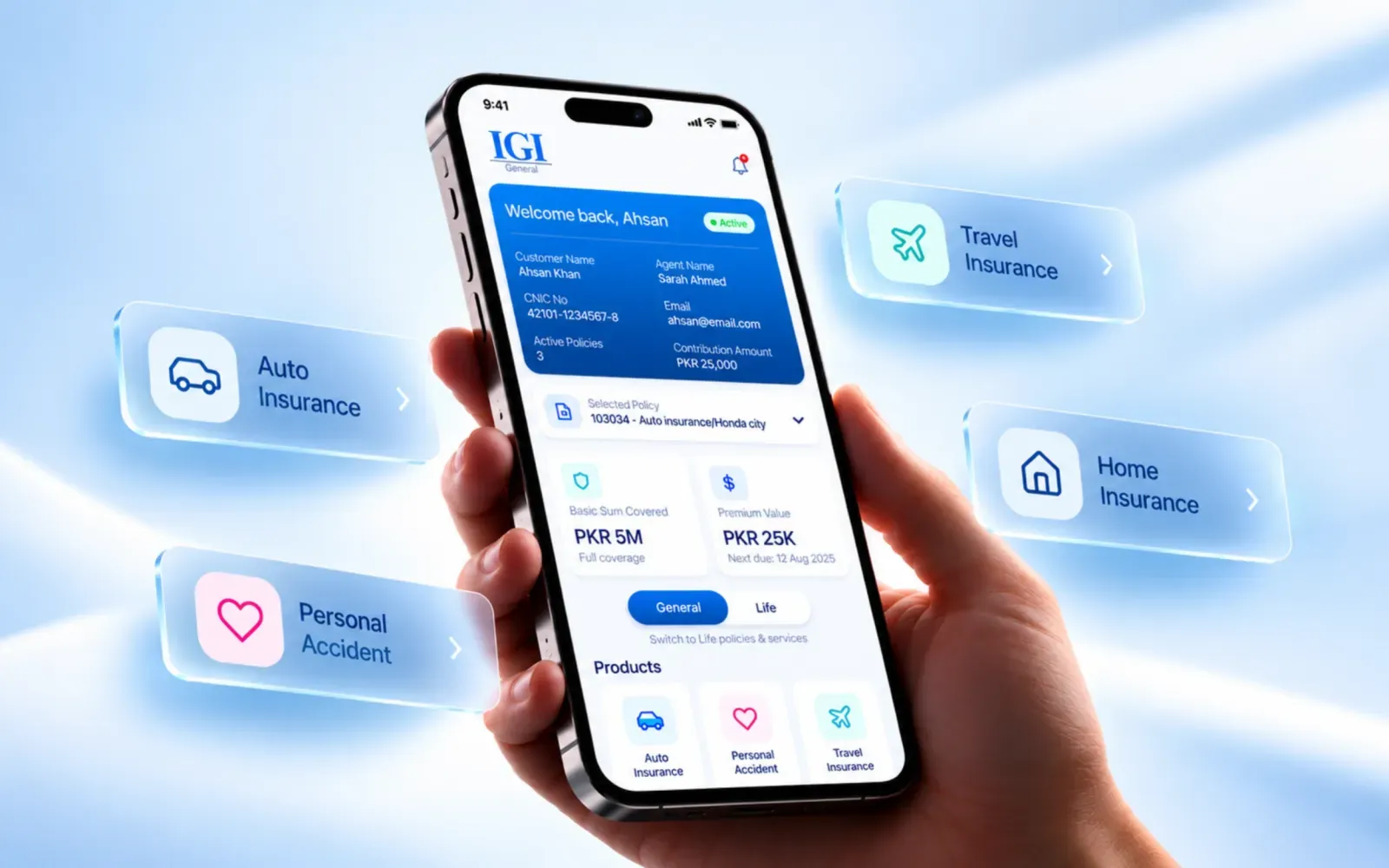
IGI General Insurance app interface displayed on a smartphoneApplication Engineering
IGI General Insurance

A 70-Year Legacy, Rebuilt for the Mobile-First Insurance Customer

<5 min
designed claim initiation, 24/7
6
insurance lines in one app
Read the case study
Why Devsinc for Mobile App Development?

Why Teams Choose Devsinc for Mobile Apps

Choosing a mobile application development company involves more than comparing technologies. Devsinc brings platform engineering, business-system integration, store submission, and post-launch planning into a coordinated delivery approach, with real project experience behind the work.

01

Platform-Aware Engineering

Devsinc builds native apps with Swift and Kotlin, and evaluates React Native or Flutter when shared code makes sense. IGI’s Phase 1 Flutter MVP shows that choice in practice across iOS and Android.

02

Enterprise Integration in Practice

For a UAE infrastructure project, Devsinc connected a React Native app and web portal to Dynamics 365, HRWorks, and Transmech. Site teams can report progress with photo evidence while office teams access connected data.

03

Support Through Store Submission

App Store and Google Play submissions involve release builds, listings, privacy information, and reviewer feedback. We plan those tasks with the client from the outset, while Apple and Google retain control of final approval.

04

A Plan for Post-Launch Work

After launch, support can cover OS compatibility, crash monitoring, security fixes, and new features. We define maintenance responsibilities and handover with each client so future releases have clear ownership and an agreed scope.

Choosing Your Approach

Native or Cross-Platform: Which Fits Your App?

The right choice between native and cross-platform development depends on your users, the device features and integrations your app needs, your team’s expertise, and long-term maintenance. Deciding before these requirements are clear can lead to rework and higher costs later. Devsinc reviews these factors with you before recommending an approach. No single development approach is right for every product.

NativeiOS
Language
Swift (and Objective-C for legacy apps)
UI framework
SwiftUI and UIKit
Codebase
iOS-specific
Often suitable for
Apple-first apps requiring iOS-specific features
What to evaluate
Apple APIs, supported devices, release requirements
NativeAndroid
Language
Kotlin (and Java for legacy apps)
UI framework
Jetpack Compose
Codebase
Android-specific
Often suitable for
Android-first apps with varied device requirements
What to evaluate
Device compatibility, OS support, Google Play requirements
Cross-platformReact Native
Language
JavaScript or TypeScript
UI framework
React Native
Codebase
Shared iOS/Android; native modules when needed
Often suitable for
Two-platform apps, especially with React/TypeScript expertise
What to evaluate
SDK compatibility, native integrations, performance
Cross-platformFlutter
Language
Dart
UI framework
Flutter
Codebase
Shared iOS/Android; plugins or native code when needed
Often suitable for
Two-platform apps needing highly customized shared UI
What to evaluate
Plugin support, native integrations, performance, app size

Still deciding? We review user journeys, device requirements, integrations, target platforms, and long-term maintenance needs before recommending an approach.

Book a Consultation
Assurance

Security, QA & App Store Readiness

Secure development, device testing, store submission, and documented responsibilities help prepare an app for release.

  • Secure Development Practices

    Authentication, permissions, storage, and third-party dependencies.

  • Functional and Device QA

    Key user journeys and compatibility on target iOS and Android devices.

  • Performance and Reliability

    Loading, connectivity, and stability checks against release criteria.

  • App Store and Play Store Readiness

    Release builds, privacy disclosures, submissions, and reviewer feedback.

  • Data Privacy and Ownership

    Data handling, store accounts, and handover terms agreed in scope.

Process

Our Mobile App Development Process

Four stages take your app from first conversation to a store release you can stand behind. Each one ends with a concrete deliverable and a review point, so you always know what is done and what comes next.

  1. 01

    Requirements and Planning

    We align on goals, users, platforms and integrations, then turn them into a scoped plan. You receive a prioritized feature list, user flows and a release plan, with acceptance criteria agreed up front.

  2. 02

    Architecture and Prototype

    We define the app and backend architecture and prototype the key user journeys. You review and test the experience before development starts, while design and technical changes are still inexpensive.

  3. 03

    Development and Device QA

    We build in short sprints with regular demos, automated tests and checks on real iOS and Android devices. Each sprint ends with working software you can review against the agreed acceptance criteria.

  4. 04

    Store Launch and Support

    We prepare release builds and manage App Store and Google Play submission, including listings and reviewer feedback, then monitor stability after launch. The next releases, including OS compatibility updates, are planned with you.

Engagement Model

Engagement Models

Two ways to work with us, matched to how your team is set up. Choose the one that fits your roadmap, and we agree roles, handoffs, and reporting before the first sprint begins, so there is no ambiguity about who owns what.

01

Embedded Team

Best for product teams with their own roadmap that need mobile capacity without a hiring cycle. Hire a mobile app development team that works alongside your existing product and engineering teams: Devsinc iOS, Android or cross-platform engineers join your sprints, tools, and rituals. You keep control of priorities and product decisions, and we contribute delivery speed and mobile depth. Handoffs follow your existing repositories, review process, and release cadence.

02

Full Build

Best for companies that want one accountable partner for the whole app. Devsinc coordinates discovery, design, engineering, testing, store submission, and post-launch support, with a documented handover of code, store accounts, and architecture, on terms confirmed in your agreement. You get a single point of accountability and one delivery plan, instead of coordinating separate design, development and QA vendors.

Technologies

Our Technology Stack

Modern, reliable, scalable technologies, chosen to fit your product.

Native iOS
  • Swift
  • SwiftUI
  • UIKit
Native Android
  • Kotlin
  • Jetpack Compose
  • Android SDK
Cross-Platform
  • React Native
  • Flutter
Backend
  • Node.js
  • Python
  • Java
  • .NET
API Styles
  • REST
  • GraphQL
Databases (server-side)
  • PostgreSQL
  • MySQL
  • MongoDB
  • Redis
Databases (on-device)
  • Core Data
  • SwiftData
  • Room
  • SQLite
  • Realm
Cloud
  • AWS
  • Azure
  • Google Cloud
  • Firebase
DevOps and Release
  • Docker
  • Kubernetes
  • GitHub Actions
  • Fastlane
Industries

Industries We Support

Mobile requirements differ by industry. We design around the workflows, integrations, and data needs behind each app.

  • Retail & Ecommerce

    Connect product search, checkout, loyalty, and inventory data to commerce platforms and existing back-office systems.

  • Hospitality & Travel

    Support reservations, itinerary changes, mobile check-in, and notifications through booking and property-management system integrations.

  • Healthcare

    Build appointment scheduling and patient messaging apps with secure access and privacy needs assessed during discovery.

  • Logistics & Field Services

    Capture job updates and photo evidence offline, then synchronize with ERP and field operations systems.

  • Fintech & Insurance

    Link onboarding, payments, policies, and claims to core financial systems while accounting for authentication and data protection.

Not on the list?

We work across many other sectors too.

Tell us about your users and constraints, and we’ll walk you through how we’d approach your app.

Talk to our Expert
Mobile App Development

Frequently Asked Questions

Straight answers to the questions buyers ask most when choosing a mobile app development company. For anything project-specific, we answer in discovery.
Request a Consultation

How much does mobile app development cost?

The cost depends on features, platforms, design, backend integrations, testing, and ongoing support. A focused MVP and a complex enterprise app require different levels of work. Devsinc reviews your requirements before discussing a project-specific scope and proposal.

How long does it take to develop a mobile app?

Timelines depend on app complexity, platform requirements, integrations, testing, and store review. A prototype or focused MVP may require less work than a multi-platform enterprise app. We define milestones and a realistic delivery schedule during discovery.

Native or cross-platform: how do we choose?

Native development is worth evaluating for platform-specific APIs, device features, or distinct iOS and Android experiences. React Native or Flutter can fit apps that share logic and interface patterns across platforms. Compare integrations, performance needs, team expertise, and maintenance before deciding.

Can you build an MVP or prototype before a full app?

Yes. If you are still validating an idea, we can prototype the key user journeys first, or scope a focused first release on one platform, and expand once real users respond. The right starting point depends on your goals, budget and timeline, and we agree it in discovery. If you are a startup that needs a wider product beyond the app, our MVP development service covers that.

Can you redesign or modernize an app we already have?

Yes. We start by reviewing the current app, including its code, performance, crash data, user experience and the systems it connects to, then recommend what to keep, improve or rebuild. Work can range from a UX refresh to refactoring or migrating to a newer framework, and we scope it in discovery. For modernization beyond the app itself, our Application Engineering services cover the wider software around it.

Can the app integrate with our existing systems and APIs?

Yes. We connect apps to CRMs, ERPs, payment gateways and identity providers through APIs. The effort depends on how well documented and stable those systems are, so we review them early and design the integration layer before the screens, which keeps later sprints predictable.

Can the app work offline and synchronize later?

Yes, where the use case needs it. The app stores data on the device, queues changes and syncs when connectivity returns. The hard part is resolving conflicts, so we agree sync rules with you at the design stage, before any code is written.

Can you build AI-enabled mobile app features?

Yes. Features such as image recognition, voice and personalization can run on the device for speed and privacy, or in the cloud for larger models. We choose based on latency, data sensitivity and cost, and start with a feature tied to a clear user need.

Who owns the source code and app-store accounts?

You do, under the terms of your agreement. The app is published under your own Apple Developer and Google Play accounts, and the code, designs and assets are handed over. We confirm these terms in writing before work begins, so there is no ambiguity at handover.

Does Devsinc handle App Store and Play Store submission?

Yes. We prepare listings, privacy disclosures and release builds, submit them, and respond to reviewer feedback. Apple and Google make the final review decision and set their own timing, so we plan release dates with that in mind and allow time for rework if feedback arrives.

What is included in post-launch maintenance?

Maintenance covers OS compatibility updates, crash monitoring, bug fixes, and security patches, with feature releases planned around your roadmap. The exact scope, response times, and monthly hours are set in a support agreement, and can cover apps another team built.
Get Started

Let’s Move Your Mobile App Forward

To process your request, we need your permission to store and process your personal data. Please check the box below to confirm your consent:

We care about your privacy. Learn how we handle your data in our Privacy Policy.